
Breast augmentation remains one of the most popular cosmetic procedures in the United States, offering women the opportunity to enhance volume, improve symmetry, and boost confidence. While traditional silicone or saline implants have long been the gold standard, fat grafting has emerged as a compelling alternative and/or complementary technique.
In this article, we explore the basics of breast augmentation and fat grafting, how the two approaches compare, and where fat grafting fits in. Drawing from the expertise of Dr. Joseph Kelling, a board-certified plastic surgeon in Dallas, Texas, we’ll break down the realities of fat grafting and whether it is or isn’t a legitimate option for breast augmentation.
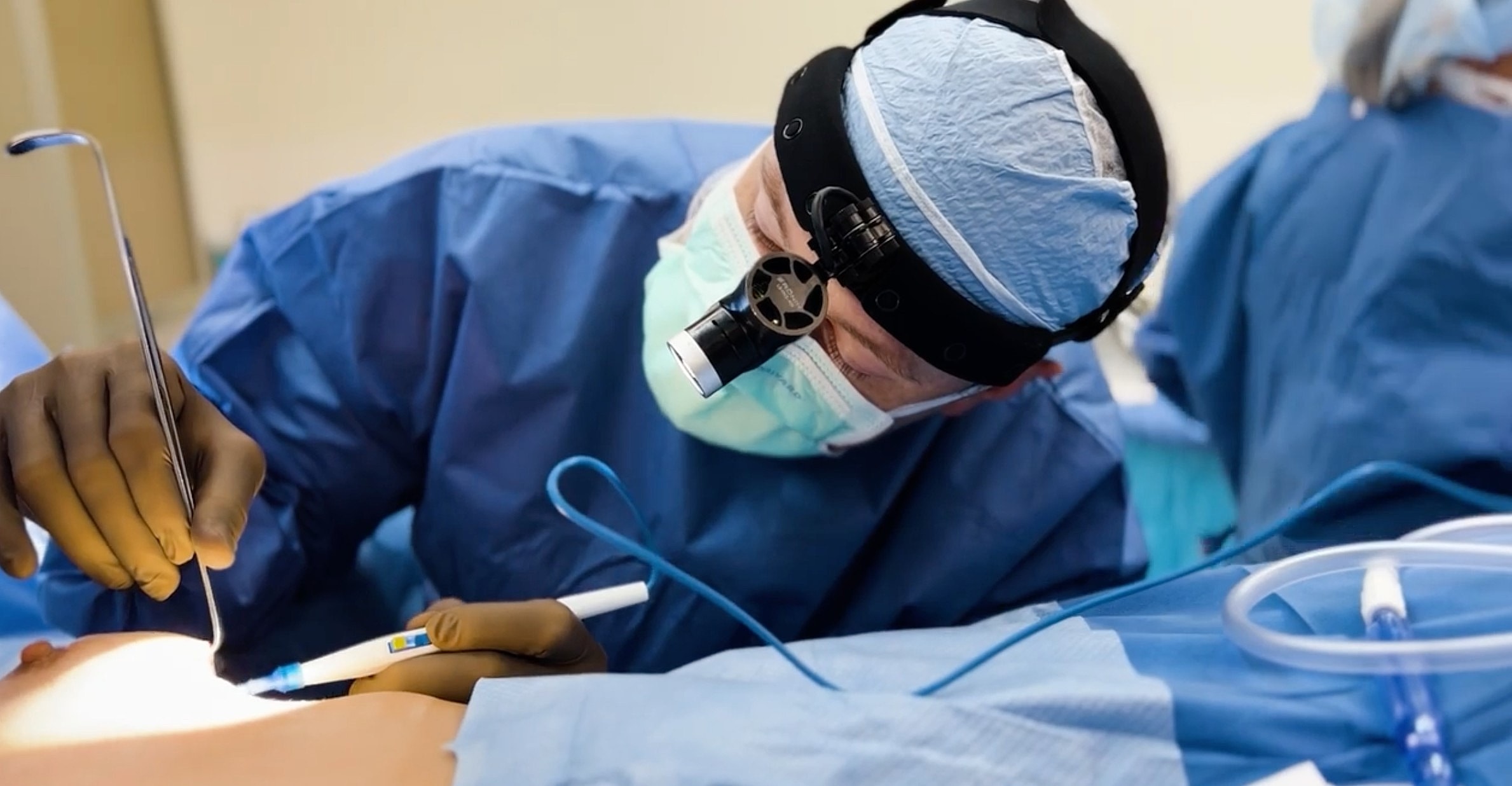
Breast augmentation is a surgical procedure designed to increase breast size, restore volume lost after pregnancy or weight changes, or correct asymmetry. The two primary methods are implant-based augmentation and fat grafting (also known as autologous fat transfer). Implants provide predictable, customizable results using cohesive silicone gel or saline devices placed beneath the breast tissue or muscle. Fat grafting, by contrast, uses a patient’s own fat harvested via liposuction from areas like the abdomen or thighs, then purified and injected into the breasts to provide volume.
Both techniques fall under the umbrella of breast augmentation, but they serve different patient needs. Implants excel at delivering significant volume increases and structural support, while fat grafting offers a more natural look and feel with the added benefits of body contouring from the donor site as well as a “natural” approach without the use of medical devices. As interest in natural-looking results grows, many patients now ask about combining or choosing fat grafting for breast augmentation. As Dr. Kelling notes, suitability depends heavily on individual anatomy and goals.
Fat grafting involves three main steps:
The procedure appeals to patients seeking a subtler enhancement without foreign materials. Because the fat is autologous (from the patient’s own body), there is no risk of implant-related complications such as rupture or capsular contracture.
That said, fat grafting is not without limitations. Survival of the transferred fat cells depends on the body’s ability to establish a new blood supply—a process called revascularization. Dr. Kelling highlights this key point: “Fat grafting in general can be a little bit unpredictable in terms of how much fat graft is gonna survive once you transfer it to the breast.” He illustrates the contrast with implants: “With the silicone breast implant, I’ve got a 300 cc implant. I know the patient is gonna get 300 cc’s of volume. Now, with fat grafting, if I transfer 300 cc’s of fat to the breast, you’re relying on your body to revascularize that fat and keep it alive, and in some patients it’s gonna be 80% of the fat that is going to survive… and maybe even 80% of the fat survives on one side and 60% of the fat survives on the other side. There’s an unpredictability to that.”
This variability means fat grafting is best viewed as a refinement tool rather than a one-size-fits-all solution for breast augmentation.
Fat grafting works exceptionally well for patients who already have a pleasing breast shape but desire a modest volume increase—typically one cup size or less. Dr. Kelling describes it perfectly: “Fat grafting is more like icing on the cake, you might say. You already have a really good breast shape, but you wanna add a very small amount of volume.”
In these cases, fat grafting for breast augmentation can create beautifully natural contours, especially when used to soften the upper pole or improve cleavage. It avoids the firmness sometimes associated with implants and integrates seamlessly with existing tissue. However, patients with minimal native breast tissue or those seeking dramatic size increases may find fat grafting alone insufficient. The breast’s tighter, more constrained anatomy compared to other areas (such as the buttocks in a Brazilian butt lift) limits how much fat can be safely and effectively placed in a single session.
Pure fat grafting for breast augmentation is therefore most appropriate for select candidates who understand the potential for touch-up procedures if additional volume is desired later. Long-term studies continue to affirm its safety when performed by experienced surgeons, but results are highly technique-dependent. For those seeking significant volume or lacking significant breast tissue, breast implants remain the go-to option for optimal results. As the most studied medical device in history, the safety profile of breast implants is excellent. In the hands of a board certified plastic surgeon like Dr. Kelling, complications are limited as much as can be possible with expertise ready to solve any issue that may arise.
Fat grafting truly excels as a complementary technique rather than a standalone method. One of its most valuable applications is alongside a breast lift (mastopexy). A lift reshapes and repositions sagging breast tissue, but it does not inherently add volume. Fat grafting fills in the gaps beautifully. Dr. Kelling explains: “It’s a good adjunct to, say, a breast lift, where the breast lift is really gonna do the majority of the shaping of the breast, but you wanna add a small amount of volume in certain areas, say the upper pole of the breast or fill out even the lower pole of the breast a little bit more, but it’s not gonna change the shape of the breast per se.”
This combination delivers both elevation and youthful fullness without relying solely on implants. The result is a more natural profile that many patients prefer.
Fat grafting also plays a key role in breast revision procedures. Women who have previously undergone breast augmentation may experience issues such as implant rippling, capsular contracture, or asymmetry over time. In revision surgery, fat grafting can camouflage implant edges, correct minor volume discrepancies, or restore upper-pole fullness after implant removal (explant). Because it adds living tissue rather than another device, fat grafting helps achieve softer, more natural revisions while reducing the need for larger or more complex implants.
For patients with tighter or narrower breasts who require structural support, Dr. Kelling emphasizes that implants remain superior: “Sometimes patients need a little bit of structure and even a force applied to the breast to change the shape and size of their breast. Say somebody with a narrower or a tighter breast may need a breast implant which has a firmer structure to it versus fat grafting.”
The success of any breast augmentation—whether using implants, fat grafting, or a hybrid approach—hinges on the surgeon’s expertise. Dr. Kelling stresses the importance of choosing a board-certified plastic surgeon who thoroughly understands the nuances of both techniques: “It’s a critical part of finding a board-certified plastic surgeon to understand these topics in regards to what you can achieve with fat grafting.”
Dr. Kelling will evaluate your anatomy, discuss realistic expectations, and tailor a plan that may combine fat grafting with other methods for optimal results. He will also explain the differences between breast tissue and buttock tissue, noting why techniques successful in one area may not translate directly: “The breast is a completely different structure on the body than, say, the buttock is. It’s a tighter area with more constrained anatomy. So doing just purely fat grafting of the breast for breast augmentation is not as good a solution as, say, a breast implant, which has been shown to be very effective and safe over the long term.”
Fat grafting for breast augmentation offers a natural, autologous option that continues to gain popularity, but it is not a universal replacement for implants. As Dr. Kelling reminds, “For some patients, it’s a really good idea. For other patients, it may not be really that ideal.” The key lies in understanding the strengths of each approach: implants deliver predictable volume and structure, while fat grafting provides subtle enhancement and serves as an outstanding adjunct in breast lift and revision procedures. During your consultation, Dr. Kelling will devise a plan that suits your unique needs, whether that is implant-only breast augmentation, a hybrid approach with fat grafting utilized as an adjunct, or perhaps fat grafting alone.
If you are considering breast augmentation, schedule a consultation with Dr. Kelling today to discover your unique situation and how he can tailor the right procedure for you. Whether your goal is a modest natural boost or a comprehensive reshaping, today’s techniques—used thoughtfully—can help you achieve results that look and feel beautifully you.