
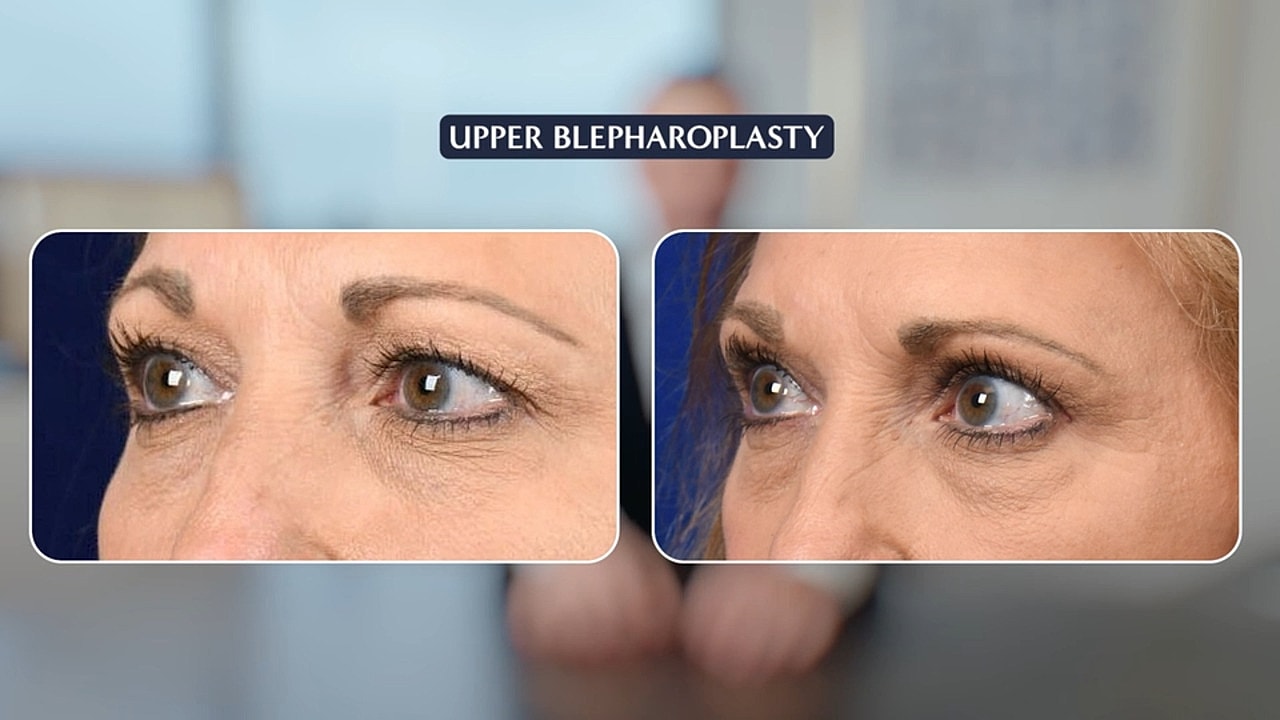
Many people begin searching for upper eyelid surgery, eyelid lift, or hooded eyelid surgery when they start noticing tired-looking eyes, even after a full night’s sleep. Known technically as upper blepharoplasty, this cosmetic procedure is one of the most effective and straightforward ways to restore a refreshed, youthful appearance to the eyes.
Dr. Joseph Kelling, a board-certified plastic surgeon in Dallas, frequently discusses this procedure with patients concerned about facial aging. In this article, we explore why patients seek upper eyelid surgery, what it can accomplish, what the procedure involves, and what recovery looks like. Excitingly, upper eyelid surgery is considered one of the best bang-for-your-buck cosmetic procedures for significantly rejuvenating the face and overall appearance.
One of the earliest and most noticeable signs of facial aging appears in the upper eyelids. Starting as early as the 30s, many individuals develop excess skin, hooding, or puffiness that makes them look older or chronically fatigued.
Dr. Kelling explains: “One of the common topics that I talk about with facial aging is really the upper eyelid, and upper eyelid surgery, also known as upper blepharoplasty. This is really one of the earliest operations for facial aging that I perform. A lot of people, even in their 30s, start to notice some sagging or looseness or extra skin on their upper eyelid.”
Patients often seek hooded eyelid surgery or an eyelid lift because excess skin can create a heavy, droopy appearance that affects their overall facial expression. In some cases, the skin hangs low enough to impair vision, turning a cosmetic concern into a functional one. Whether for aesthetic rejuvenation or improved vision, upper blepharoplasty consistently ranks among the most satisfying facial procedures.
Upper eyelid surgery delivers subtle yet powerful improvements. The procedure removes excess skin and, when needed, repositions or removes small amounts of fat to reduce puffiness. The result is a more open, alert, and youthful eye appearance without changing the natural shape of the eyes.
Dr. Kelling notes that this procedure primarily addresses cosmetic concerns: “Looseness or extra skin on your upper eyelid or extra fat along your upper eyelid really is where that upper blepharoplasty comes in, and the goal of the operation is to remove that extra skin and some of the puffiness that you have on your upper eyelid.”
Many patients report looking more rested and approachable after blepharoplasty. The surgery can also improve the application of eyeshadow and eyeliner by creating a smoother, more defined eyelid platform. When performed skillfully, upper eyelid surgery produces natural-looking results that enhance your appearance without making it obvious you had work done.
Good candidates for upper eyelid surgery or hooded eyelid surgery include healthy adults who have:
It’s important to distinguish between excess skin (cosmetic) and true ptosis (a drooping eyelid muscle), which may require a different functional procedure. A consultation with a board-certified plastic surgeon is the best way to determine the most appropriate treatment.
Upper blepharoplasty is a relatively quick and straightforward outpatient procedure. It is typically performed using local anesthesia with sedation, though general anesthesia is available for patients who prefer it.
During the surgery, Dr. Kelling makes a fine incision along the natural crease of the upper eyelid. Through this discreet incision, he carefully removes excess skin and any protruding fat pads. The incision is then closed with fine sutures that usually heal very well and become nearly invisible over time.
Dr. Kelling highlights its simplicity: “It’s a really easy operation for the majority of patients… It’s an operation that I can do with just local anesthetic in the office… a really quick and easy 30 to 60-minute operation.”
Because the procedure is minimally invasive and focused only on the upper lids, it can often be combined with other facial rejuvenation procedures such as a brow lift, or even a facelift, for even more comprehensive results.
One of the biggest advantages of upper eyelid surgery is the relatively easy recovery compared to other facial procedures. Dr. Kelling reassures patients: “The recovery is super simple. Typically, you have a little bit of bruising that can last one to two weeks, and in the majority of patients, you’re totally healed and back to all regular things, not even thinking about the operation at three weeks after surgery.”
Most patients experience mild swelling and bruising for the first 7–10 days. Cold compresses, head elevation, and prescribed ointments help minimize these effects. Many patients feel comfortable returning to work and social activities within 7–10 days, although strenuous exercise should be avoided for about three weeks.
Because the incisions are hidden in the natural eyelid crease, scarring is typically minimal and fades very well over time.
The results of upper blepharoplasty are long-lasting and highly satisfying for most patients. Once the excess skin and fat are removed, the eyes appear brighter, more open, and more youthful. These improvements often last for many years, and in some cases, patients may never need a repeat procedure.
Patients frequently comment on receiving compliments about looking well-rested rather than questions about having surgery. When viewing blepharoplasty before and after photos, the transformation is often described as “refreshed” rather than “changed.”
Dr. Kelling emphasizes the value of the procedure: “I think for the majority of patients, this is a great operation, and the results are totally worth it with very minimal downtime.”
For even more comprehensive rejuvenation of the eye area, many patients choose to combine their upper blepharoplasty with Botox (or other neurotoxin injections). While upper eyelid surgery removes excess skin and fat, Botox effectively smooths dynamic wrinkles such as crow’s feet, forehead lines, and frown lines by relaxing the underlying muscles. This powerful combination — one surgical and one non-surgical — delivers dramatic yet natural-looking results with minimal additional downtime. Dr. Kelling often recommends this pairing because it addresses both the structural heaviness of the upper lids and the fine lines around the eyes, creating a refreshed, more rested appearance that looks harmonious and youthful.
Upper eyelid surgery (upper blepharoplasty) offers one of the highest satisfaction rates in cosmetic surgery because it is relatively simple, has minimal downtime, and delivers visible, natural-looking rejuvenation.
If you find yourself looking tired despite feeling energetic, or if hooded eyelids are making you appear older than you feel, eyelid lift surgery may be an excellent solution. The procedure can dramatically improve your facial appearance while remaining subtle enough that friends and colleagues may only notice you look more refreshed and rested.
To learn whether upper blepharoplasty is right for you, schedule a consultation today. With minimal invasiveness and excellent results, this procedure continues to be a popular choice for patients seeking targeted facial rejuvenation.